We all know that Pétanque is the quintessential summer ritual. The sun is shining, you have a cold drink in your hand, gravel under your feet, and a small wooden jack in front of you, calling you to battle. The French have long made Pétanque a symbol of friendship and relaxation, and now more and more people here are dreaming of having their own court right in their backyard.
Why wait for a spot to open up in the park? You can build your own court. It only takes four steps, and yes, you’ll be the most popular neighbor in the neighborhood.
Why build a Pétanque court?
You can play almost anywhere: on a vacant lot, in a parking lot, in your yard. But your own court is always better. First, you always have a ready-made place to play right at your fingertips. Second, a court adds coziness to your garden or yard, turning it into a gathering place for friends and family. And third, you decide how to design it.
The official dimensions of a Pétanque court are 4 meters in width and 15 meters in length. But for home games, 3 by 12 meters is quite enough. And yes, this space will easily fit into a typical suburban plot.
Preparation
Any construction project begins with choosing a location. Ideally, it should be a corner of the garden, shaded by trees or near a gazebo. Pétanque players love the sun, but they need to stay in shape, and overheating is undesirable.
First, mark out the area, which should be at least 12 meters long and 3 meters wide. Take a cord, pegs, and a spirit level to make outlining the future court easier. Then remove the top layer of soil to a depth of 25–30 centimeters. This is necessary to lay all the layers of the surface. In the process, remove stones, roots, and weeds, and level the surface. And yes, get an assistant: two people can work faster, and one person will get tired before reaching the required depth.
Marking and frame
When building your first Pétanque court, a couple of tips from French Pétanque fan forums can come in handy. The main thing is to make the right base.
- Cover the entire area with a layer of coarse gravel about 5 cm thick.
- Tamp down and level the surface well; otherwise, the balls will roll to the edges.
- Lay down geotextile. This is a special fabric with holes. It allows water to pass through but prevents weeds from growing.
- Install a wooden or metal frame around the perimeter. It will hold the covering in place and serve as a boundary for the game.
The frame must be sturdy, because it is the first to take the impact of the balls when players miss their shots.
The base for the game
This is where the magic begins. A second layer of smaller gravel, 10-15 cm, is laid on top of the geotextile. We also tamp it down, water it, and level it carefully.
Then we add stabilized sand or a mixture of fine gravel and sand. The thickness is approximately 5 cm. This layer will become the surface on which your boules will roll. It should be both dense and slightly loose so that the balls stay on track, but you can also knock your opponent off with a well-aimed throw.
Some fans advise additionally treating the surface with a roller. But if you don’t have the equipment, a good vibrating plate or at least a hand tamper will suffice.
Final touches
 Once the court is compacted and level, leave it alone for at least 4–5 days. During this time, the soil will settle, and the sand will reach the desired density.
After that, water it again, tamp it down, and add more sand if necessary. The surface should be smooth, but not mirror-like. If the ball rolls too fast, add a little gravel to slow it down. If it rolls too slowly, remove the top layer and replace it with finer sand.
The atmosphere around
The court is ready, and now comes the best part: the decoration. Pétanque is a social ritual. Therefore, it is worthwhile to create a space for socializing around the court.
What might come in handy:
- Benches and tables: to sit with a glass of wine or a cup of coffee between games;
- Lanterns or garlands: evening games always add a touch of romance.
- Barbecue or grill: because a game of Pétanque rarely goes without snacks.
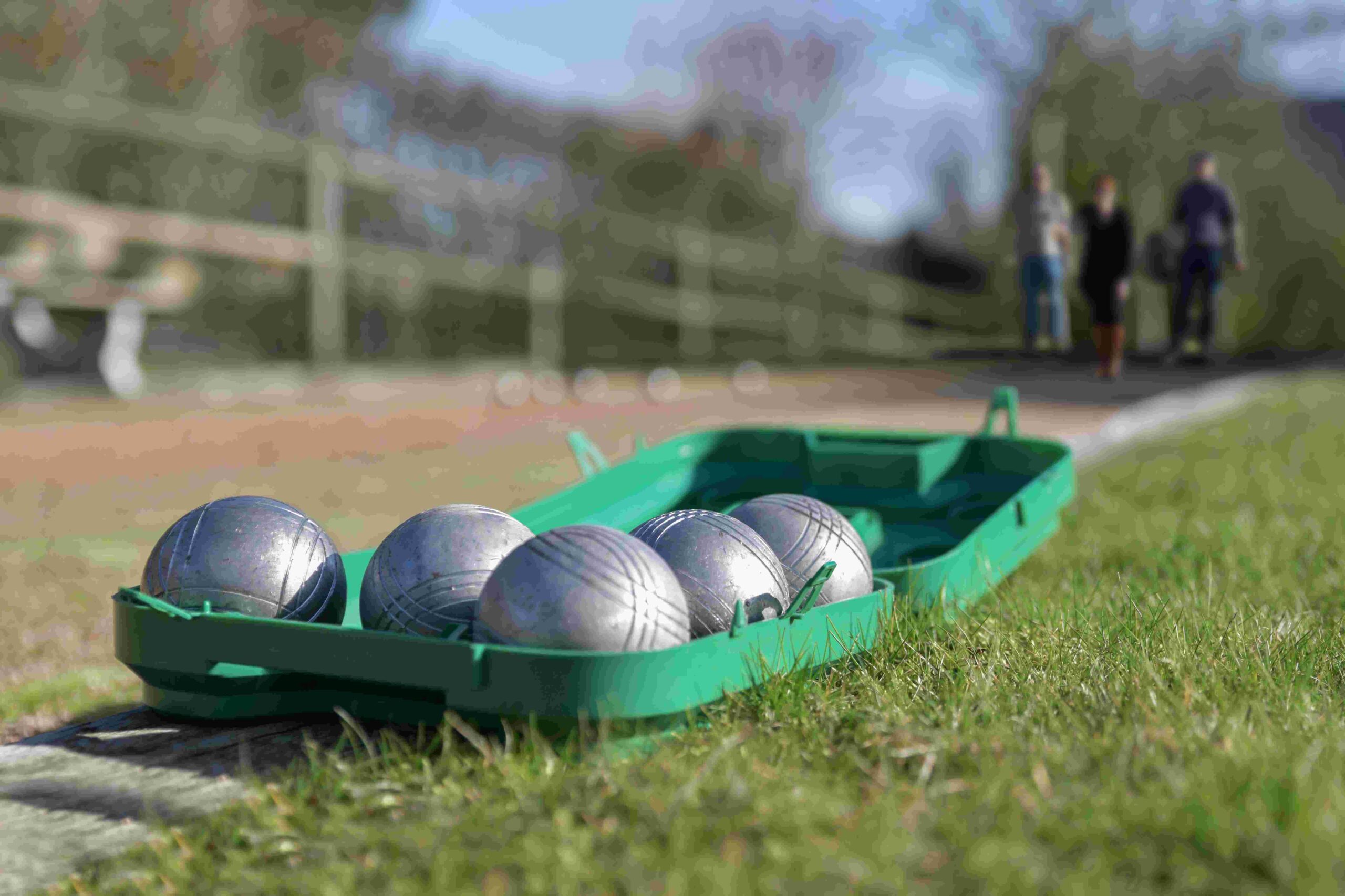
- Box for storing balls and jacks: order is also essential, otherwise you will be running around the yard looking for equipment.
Building a Pétanque court is an investment in the atmosphere of your home. It is a place for friendly evenings, family celebrations, and even impromptu tournaments. A court in the garden transforms an ordinary plot into a small arena for sports and fun.
And yes, after the first game, you will realize that the effort was worth it because Pétanque is about excitement, strategy, and the joy of being together.